
🌿 FIELD NOTES: Muscovy Ducks
Why the Tail Wag?
Those little wagging tails may be saying more than you think.
If you've spent much time around Muscovy ducks, you've probably seen it: that quick, enthusiastic little tail wag that makes them look surprisingly dog-like.
Our regular Muscovy visitors do it often. And we've noticed that two of our girls are especially enthusiastic tail-waggers when they see us coming with food.
So naturally, we wondered:
Why do Muscovy ducks wag their tails?
The answer is more interesting than we expected.
Muscovies rely on body language as part of their communication. Tail movements can be part of that visual vocabulary, along with movements of the head, crest and wings. Cornell's All About Birds notes that male Muscovies shake their tails as part of courtship displays, while other behavioral references describe tail-shaking among their social displays.
But a wagging tail doesn't necessarily translate into one simple message like “I'm happy!” or even “Feed me!” Context matters.
What we can say is what we've observed here at The Wild Welcome: these two frequently start wagging those little tails when they approach us around feeding time.
Do they recognize that food may be coming? Are they excited? Is the wag simply part of the social interaction?
We can't ask them.
But they've certainly learned to recognize us — and we've started learning to recognize some of their signals.
Basically... we're learning to speak a little Muscovy.
Not your ordinary duck
Muscovies are unusual ducks in several other ways, too.
They're generally much quieter than the familiar quacking ducks many of us picture. Females can make quiet calls, while males are known more for hissing and puffing. And those strong feet aren't just for waddling around the pond: Muscovies have claws and naturally spend time perching in trees.
Florida's Muscovies also have an interesting history. Truly wild Muscovies are native from parts of southern Texas south through Mexico and into Central and South America. The familiar Muscovies seen around Florida are part of established feral populations descended from domesticated birds.
Which means those funny little tail wags are just one small piece of what makes these familiar Florida neighbors more interesting than they may first appear.
And that's exactly why we keep watching.
Sometimes the smallest behaviors tell the best stories.
🌿 Look a little closer.
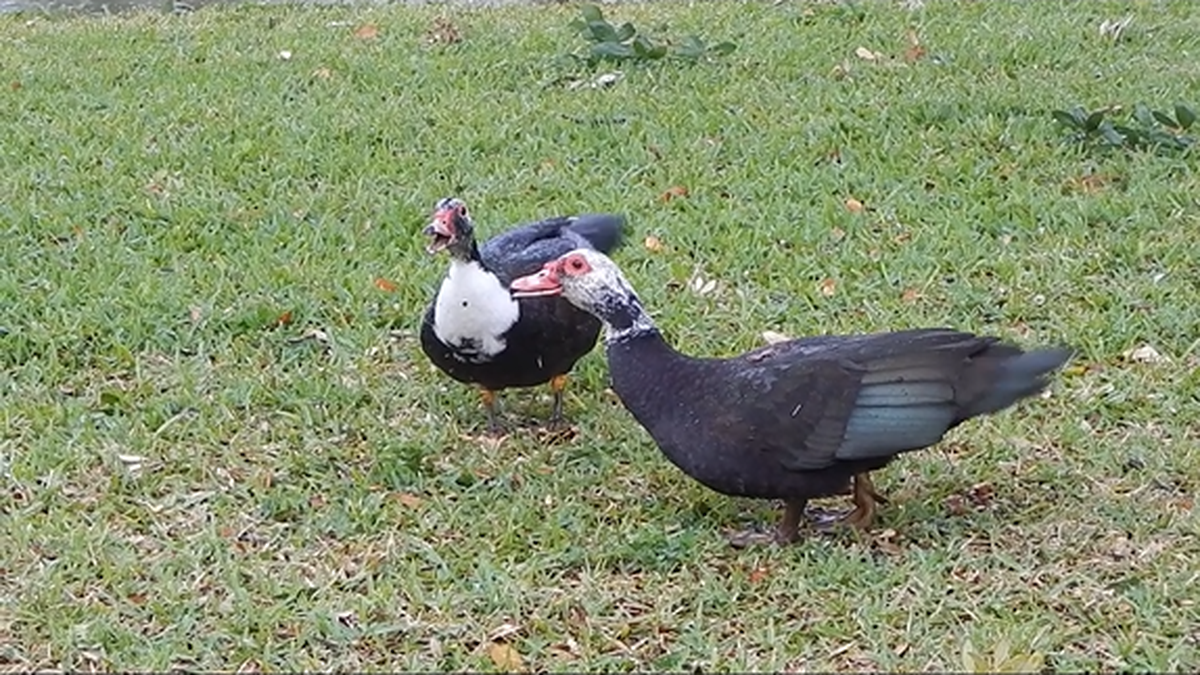
Two Muscovy sisters chatting and wagging
Why do Muscovy ducks wag their tails?
