
🌿 FIELD NOTES: Starbuck's Antler Transformation
FIELD NOTES | Look a little closer.
What happens when a buck's antlers are finally ready to lose their velvet? And does the process look the same for every deer?
At The Wild Welcome, some of our most interesting wildlife discoveries come from watching familiar visitors over time.
One of those visitors is Starbuck, an eight-point white-tailed buck who has become a familiar presence on our backyard trail cameras in Palm Harbor, Florida.
During September 2026, our cameras captured three remarkable stages of his antler transformation—from velvet-covered antlers to active shedding and finally a clean, hardened rack.
But the footage also raised questions we hadn't expected.
September 6: Antlers Still in Velvet
On September 6, Starbuck appeared on our trail camera with his eight-point rack still covered in velvet.
Despite its name, antler velvet isn't simply a soft outer covering. It's living tissue containing blood vessels and nerves that nourish developing antlers during their rapid growth.
White-tailed bucks grow a new set of antlers each year. As the antlers develop, velvet supplies the nutrients necessary for that growth.
Eventually, increasing testosterone levels associated with the breeding season help bring antler growth to an end. The antlers mineralize and harden, blood flow to the velvet declines, and the velvet begins to dry and separate.
It's a remarkable transformation—and one that happens again each year.
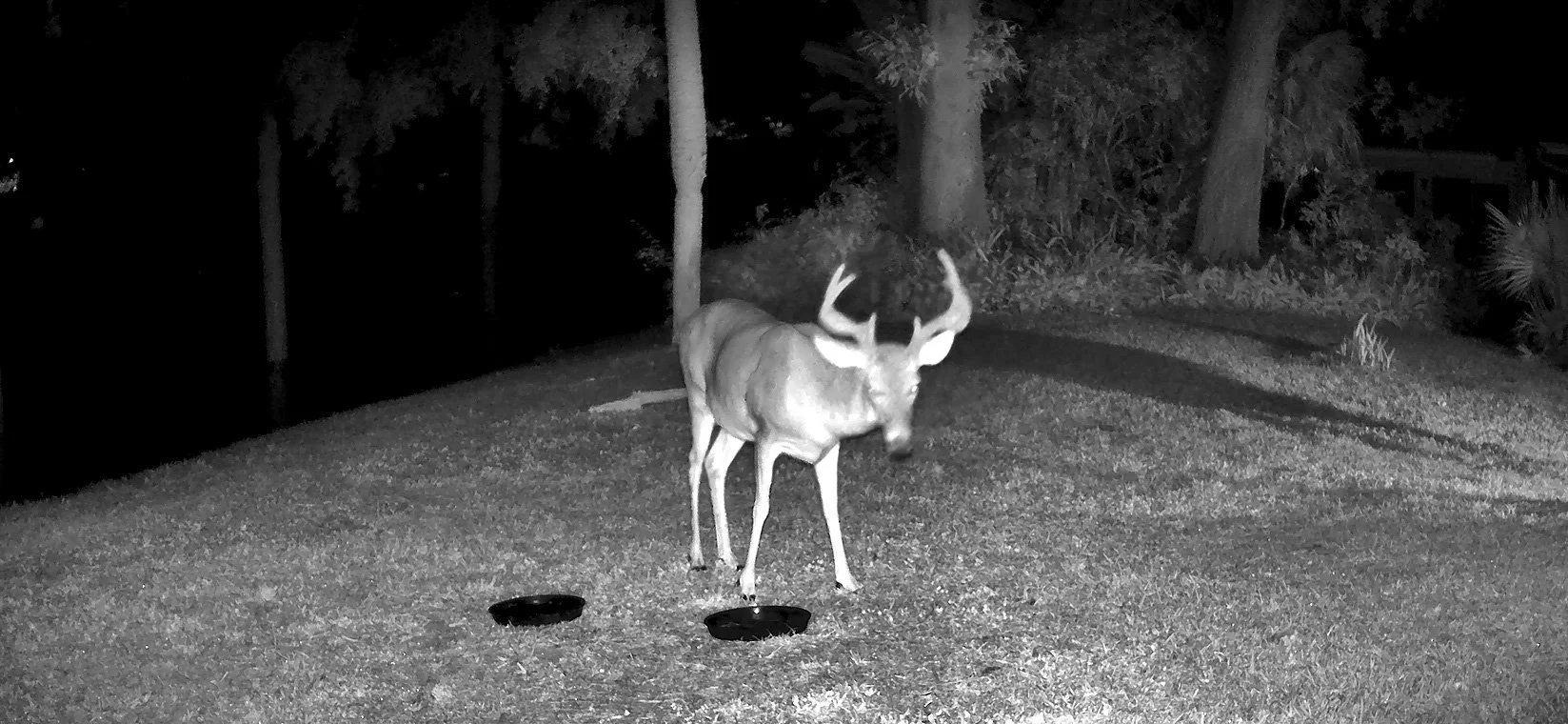
Starbuck in Full Velvet — September 6, 2026
September 15: The Velvet Begins to Come Off
At 9:26 p.m. on September 15, our trail camera captured Starbuck during the shedding stage.
Pieces of velvet were hanging from his antlers, and he was actively moving his head and using his mouth around the loosening tissue.
We observed him shaking and tossing his head, as well as appearing to bite or pull at the velvet.
Bucks are known to rub their antlers against trees and other vegetation during velvet removal. But in this recording, we were particularly interested in the movements Starbuck made without an obvious tree or branch involved.
Was he trying to dislodge the loose velvet? Was the tissue irritating him? Or were these simply movements that happened while the velvet was separating?
The footage shows us what he did. It doesn't tell us exactly why.
And that's an important distinction in wildlife observation.
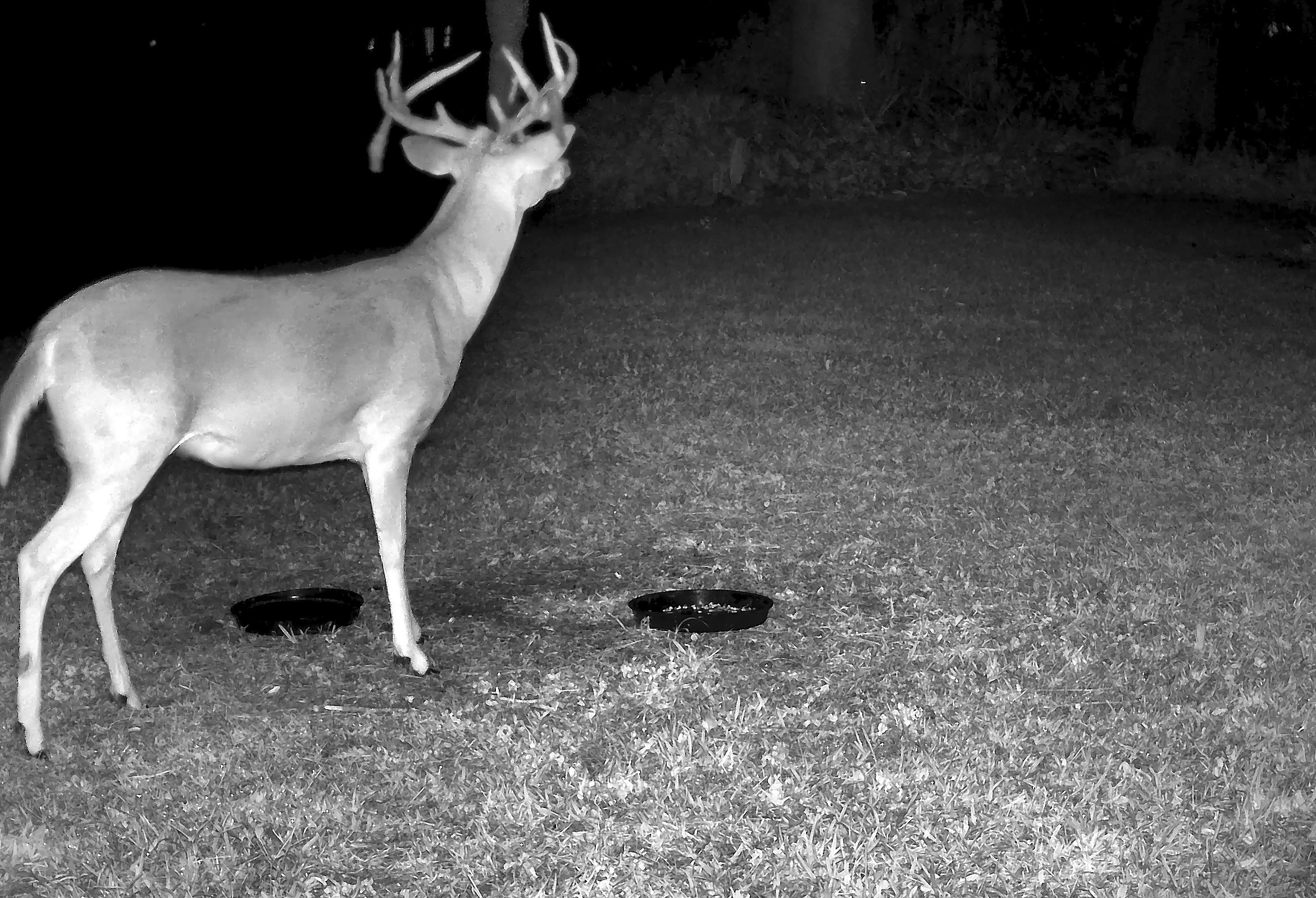
Starbuck shedding his antler velvet — September 15, 2026.
September 19: A Different-Looking Rack
By September 19, Starbuck was back on camera with clean, exposed antlers.
Gone were the loose strips of velvet. In their place were the smooth, hardened antlers that bucks carry into the breeding season.
The difference was striking. Just days earlier, we had watched him working at the shedding velvet. Now his eight-point rack was completely clean.
Our recordings document Starbuck's transformation over a 13-day observation period, from September 6 through September 19.
They don't establish exactly how long the shedding itself took. Trail cameras capture moments in time, and much of an animal's activity happens between recordings.
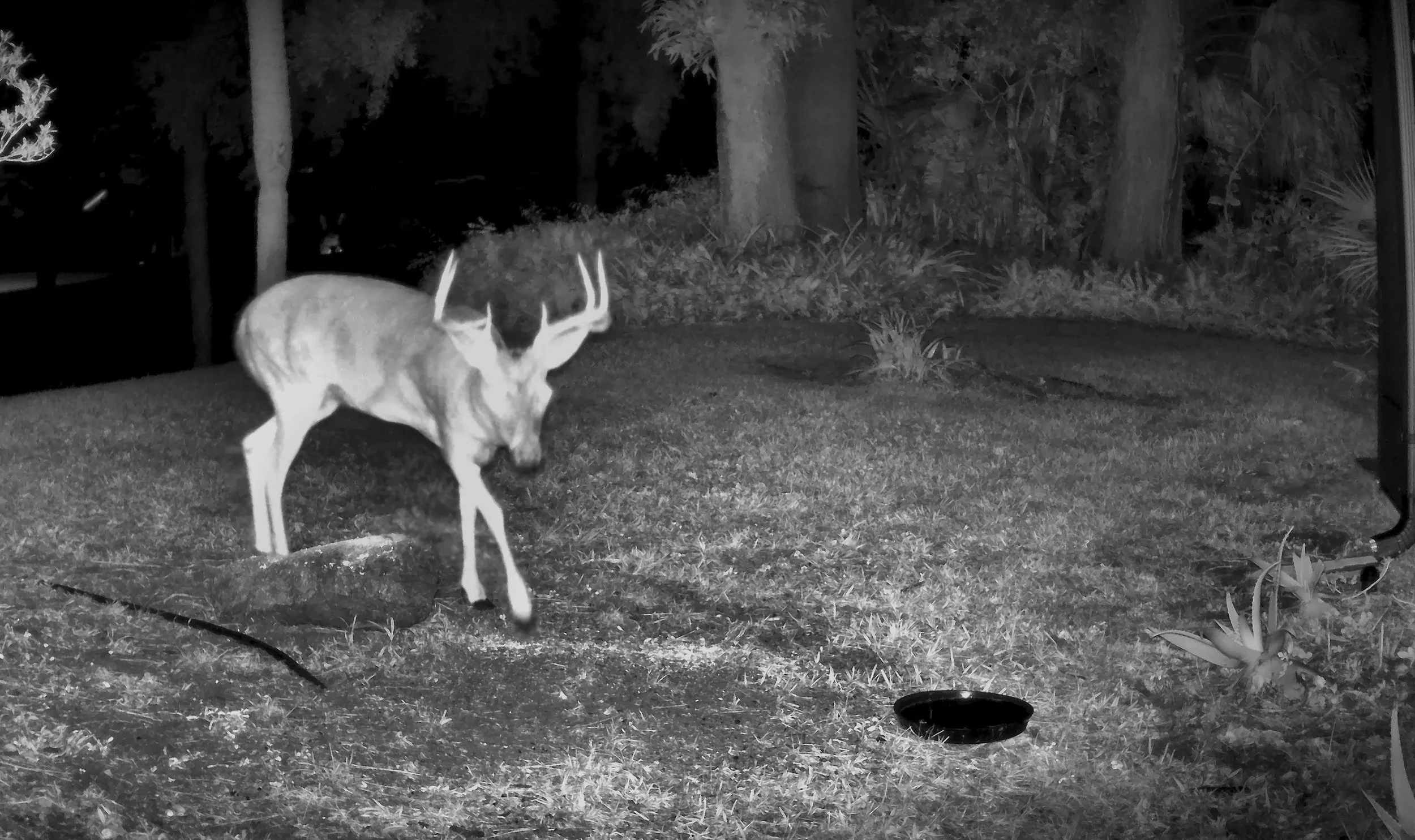
A Different-Looking Rack — September 19, 2026.
Why Are His Antlers So White?
One of the most interesting questions came from comparing our Florida deer with deer we've observed elsewhere.
The freshly exposed antlers on our local bucks often appear strikingly pale—almost pearly white.
That made us wonder whether Florida bucks rub their antlers against trees and shrubs differently from deer in places such as Georgia, where we've seen darker-looking antlers.
Tree rubbing can stain antlers through contact with bark, sap, and other plant material. Newly exposed antlers can be naturally pale before they acquire darker coloration.
But pale antlers alone don't prove that a buck rubs less frequently.
Florida white-tailed deer do rub trees, both in connection with velvet removal and as part of their breeding-season behavior. Differences in antler color may involve vegetation, timing, individual behavior, and other factors.
For now, our observation remains a question rather than a conclusion:
Could differences in local vegetation or rubbing behavior help explain the pale antlers we're seeing?
It's something we'll continue watching for as our backyard visitors move through the seasons.
What Starbuck Taught Us About Looking Closer
The most valuable part of these recordings wasn't simply seeing antler velvet disappear.
It was noticing the details along the way.
The loose pieces of velvet. The sudden head movements. The use of his mouth. The surprisingly pale antlers afterward.
Each detail prompted another question, and each question gave us a reason to look more closely.
That's the purpose of Field Notes at The Wild Welcome.
We use original wildlife photography and video to explore the natural world through observation, curiosity, and research. Sometimes we find a clear scientific explanation. Other times, the most interesting discovery is realizing how much we still have to learn.
And with familiar visitors like Starbuck returning to our cameras, there's always another opportunity to observe.
Because every visitor has a story to tell.
Watch Starbuck's Transformation
Original wildlife observations recorded in Palm Harbor, Florida, September 2026.
The Wild Welcome | Field Notes — Look a little closer.
